Prepare for Your First Remote Assistant
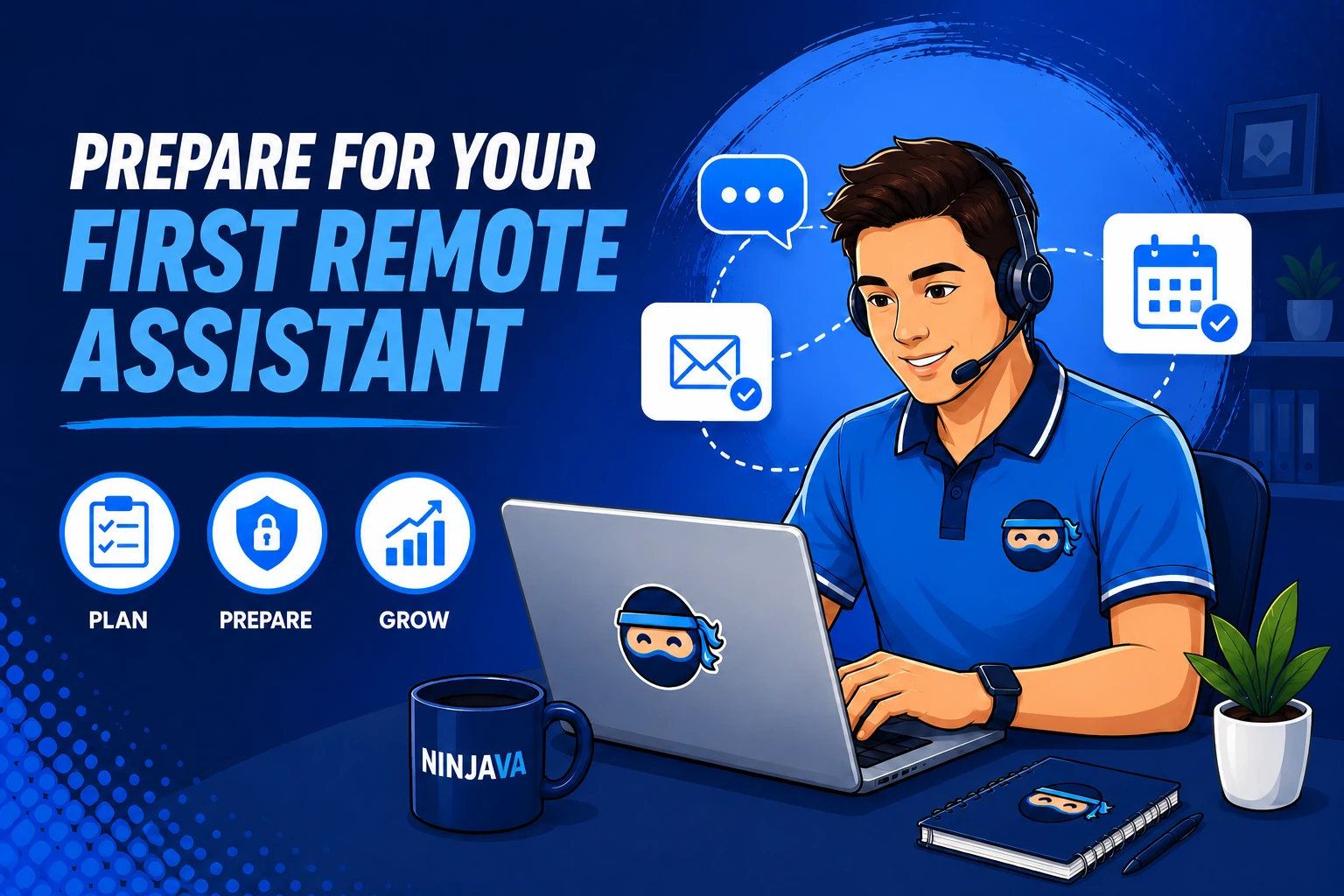
When you spend your days balancing customer calls, scheduling, and quote follow-ups between job sites, it is hard to find the margin to grow. The truth is, as your service business scales, the daily office work does not just pull you from the field; it can become a bottleneck that slows technician growth, disrupts strategy, and leaves money on the table from missed opportunities.
Hiring your first remote assistant (VA) feels like a leap, but with a bit of prep, it is one that pays for itself many times over. Here is how to set up your business so a remote office team member can hit the ground running and free you up to lead, not just react.
Identify the Right Tasks to Delegate
The first step is to get clear on what you want off your plate. Most owners start with essential but repetitive work: scheduling, confirming appointments, answering customer calls, estimate follow-ups, updating your CRM, and handling email. These are not usually complex, but they are constant.
If a task drains your time or mental bandwidth but does not require your unique expertise, it belongs on your VA’s desk. Think of customer response coordination, estimate management, simple bookkeeping, or even routine social media check-ins.
Stepping back and making this list also reveals gaps in your systems. Defining what to hand off helps you spot the habits or processes that slow your entire operation.
Document Essentials (But Don’t Wait for Perfection)
The next question most owners have is: “How do I train someone when my processes aren’t formalized?” The answer is, you do not need a polished operations manual. What matters is giving your VA access to the knowledge and systems they will use daily, and involving them in documenting as they learn.
Start by showing your VA a process via Zoom or screen share. As they follow along, have them write up each step. You save time and immediately see whether they grasp the tasks. Later, their documentation lays the groundwork for training the next team member, and for you to step back with confidence.
Building out even basic process notes now makes your business stronger for the future. The act of onboarding your VA creates clarity that lasts far beyond your first hire.
Set Up Your Tech and Security
Since your VA will be working remotely, smooth and secure communication is non-negotiable. Make sure you are equipped with a few core tools:
- Slack or WhatsApp for everyday communication.
- Zoom, Slack Huddle, or WhatsApp video calls for real-time meetings.
- Gmail for email organization.
- OpenPhone or a similar VoIP phone service so your VA can handle customer calls.
For capturing or sharing office processes, tools like ScribeHow and Loom are useful. But regardless of the platform, security matters. Share files and information using password protection, limit user permissions for sensitive apps, and keep confidential business data locked down.
Thoughtful tech setup is not about fancy features; it is about freeing your VA to contribute without creating new headaches for you.
Create a Cadence for Communication
No remote team member works well in a vacuum. Especially during the first weeks, schedule check-ins to review their tasks, answer questions, and catch any confusion before it snowballs. Twice-daily quick meetings the first week are a good rule of thumb, followed by daily or as-needed check-ins as your VA gets in rhythm.
Regular conversations build trust, clarify expectations, and make sure your VA’s time is spent where it delivers the most value.
Why Preparation Leads to Real Growth
Handing off the daily office grind is not just about saving time. It is about putting systems in place that let your company increase capacity, even if you are in the field all day or stepping away from the front lines.
Owners who prepare in advance find that onboarding a VA forces healthy upgrades in their operations and quickly reveals just how much you can accomplish when you are not the bottleneck. You do not need to have everything finalized before you start. Simply setting aside time to define what you want and how you will communicate lets your VA quickly become an asset rather than another management project.
Investing a bit of preparation up front makes it possible for a remote assistant to do what you hired them for: free you up to focus on growth, not just daily tasks.
Ready for a Remote Assistant? Let’s Make It Easy
NinjaVA exists to help home service businesses build reliable office support that actually improves customer response, scheduling, and back-office consistency. Our hiring, training, and management systems are built from experience, with a straightforward process that supports you every step of the way.
If you are curious how NinjaVA handles the details, or want to see how a VA could fit your business, let’s talk! Book a demo to see how a dedicated remote assistant could support your business.